Uganda—Sustainable Market Inclusive Livelihood Pathways to Self-Reliance Program (SMILES)
Client: IKEA Foundation
Duration: 2022-2027
Region: Sub-Saharan Africa
Country: Uganda
Solutions: Corporate Consulting
The IKEA Foundation is one of the world’s largest private funders committed to helping refugees achieve economic self-reliance and sustainable livelihoods.
The Sustainable Market Inclusive Livelihood Pathways to Self-Reliance program (SMILES) seeks to address rural refugee livelihood challenges in Uganda. SMILES aims to help ultra-poor refugee and Ugandan (host community) households in the Kikuube and Kyegegwa Districts graduate from food insecurity and fragile livelihoods to self-reliance and resilience.
The project combines a graduation approach, led by AVSI, and a market systems development (MSD) approach, led by DAI in partnership with the United Nations High Commissioner for Refugees (UNHCR), REPARLE, Innovations for Poverty Action (IPA), and the University of Makerere.
The SMILES Story Booklet illustrates how humanitarian and Market Systems Development approaches can be integrated to catalyze sustainable outcomes for the most vulnerable.
Sample Activities
- Conduct women, youth, weather-related risk, and market systems assessments in target refugee areas.
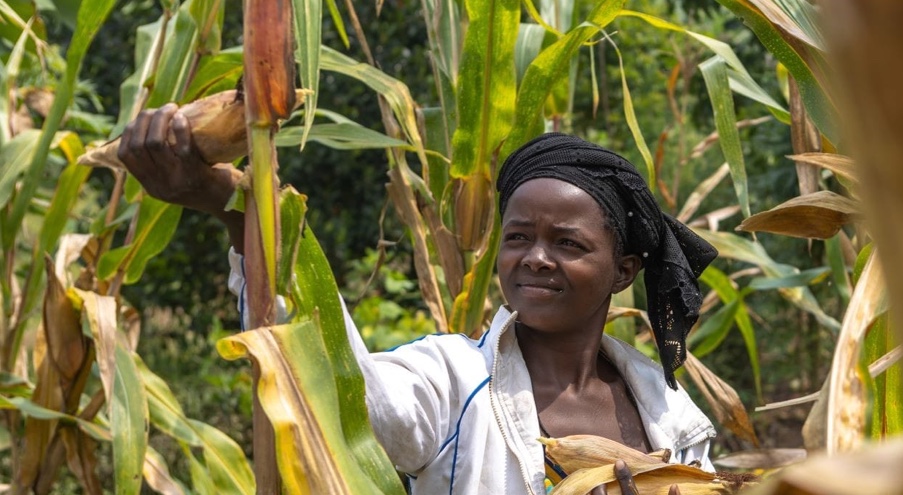
- Partner with national agri-input suppliers and buyers to expand the commercial potential of refugee and host community farmers in value chains such as maize, beans, and horticulture.
- Incentivize fintech providers to use digital platforms to partner with local refugee-led Savings and Credit Cooperative Organizations (SACCOs).
- Build last-mile distribution networks with clean energy enterprises to expand solar pay-as-you-go business models to expand refugee livelihoods activities (such as household lighting, solar-powered irrigation, and affordable power to run a fridge in their microenterprises).
- Design randomized control trials to test new models for integrating the graduation and MSD approaches.
Find out more about how DAI brings market systems development to refugee and vulnerable communities
Financial Services, MSD, and Resilience: Case Studies from East Africa – Can financial services and the broader financial market ecosystem help build climate resilience among marginalized communities? This paper explores how the application of innovative financing models, the development of digital ecosystems, and institutional collaboration are building resilience.
A Market Systems Approach to Climate-Smart Agriculture in Uganda – The Feed the Future Inclusive Agricultural Markets project in Uganda used a market systems approach that addresses obstacles to adopting climate-smart agricultural practices to help smallholder farmers boost their resilience to an increasingly unpredictable climate.
Beyond the Last Mile: Developing the Solar Energy Market with Refugee and Host Communities – This SHARPE Factsheet explores how strengthening the solar energy market can expand access to reliable, affordable electricity for refugee and host communities in Ethiopia’s Somali region. SHARPE’s partnership with HelloSolar addressed barriers such as low-quality products, lack of after-sales service, and limited financing by introducing high-quality solar kits with PAY-GO payment options.
Feed the Future Uganda Inclusive Agricultural Markets Activity: Early Evidence of Successful Layering in Resilience Zone – The Feed the Future Uganda Inclusive Agricultural Markets Activity demonstrates how layering private sector investment onto existing humanitarian initiatives can strengthen agricultural markets and improve opportunities for smallholder farmers and refugees in Uganda’s resilience zones.
Investment in Quality Seed Boosts Incomes for Host and Refugee Communities in Ethiopia’s Gambella Region – This SHARPE Factsheet explores how strengthening local seed systems can increase agricultural productivity and incomes for smallholder farmers. SHARPE’s partnership with Alworo Beher Agricultural Development Plc addressed constraints such as limited access to quality seed and weak commercial supply chains by introducing a contract farming model for seed multiplication.
Featured Links
RELATED CONTENT:
Oman—In-Country Value Industrial Baseline Study
DAI’s Sustainable Business Group (SBG) created an in-country value (ICV) demand and supply analysis for an oil and gas project in Oman using both qualitative and quantitative analyses.
Read More