Nigeria—Fiscal Efficiency Observatory: Digitized Revenue Mobilization for Human Capital Development
Client: Gates Foundation
Duration: 2026-2027
Region: Sub-Saharan Africa
Country: Nigeria
Solutions: Governance
As in many emerging economies, Nigeria’s fiscal challenge is to raise more revenue while ensuring that those public resources are generated fairly, allocated effectively, and spent in ways that improve services and human development. Although the country’s federal and state governments have made progress in fiscal transparency, budgeting, public financial management, and domestic revenue mobilization (DRM), these reforms have not always led to improved institutional performance or better health, education, nutrition, and other outcomes.
Digital fiscal systems offer opportunities to improve transparency, expand the tax base, and link revenue gains more directly to social benefits. But revenue drives can also create risks, including imposing disproportionate burdens on poorer citizens, weakening public trust, and generating new resources without sufficient accountability for how they are spent.
Designed to help Nigerian governments convert new fiscal space into better, more equitable social spending, the Fiscal Efficiency Observatory will establish a learning and accountability mechanism that connects DRM with public expenditure management and human capital development.
During its initial one-year phase, the Observatory will focus on diagnosis, evidence generation, benchmarking, and institutional engagement; examine how digital revenue administration can strengthen fiscal performance while promoting equitable taxation, transparency, and accountability; and identify practical approaches for ensuring that increased revenue supports public services and produces measurable benefits for citizens—particularly women, children, and vulnerable populations.
The Observatory will engage relevant federal and state government institutions responsible for revenue administration, finance, budgeting, planning, and priority social sectors, drawing on the experience of Nigerian public institutions, civil society, technical specialists, and development partners. By sharing evidence and innovations, the Observatory will help governments move beyond short-term revenue drives toward sustainable fiscal efficiency.
Depending on the results of its 12-month diagnostic phase, the project may be extended to apply the approaches developed through the Observatory, with the objective of generating a scalable model for Nigeria and, over time, other African countries seeking fairer, more transparent, and more effective fiscal governance.
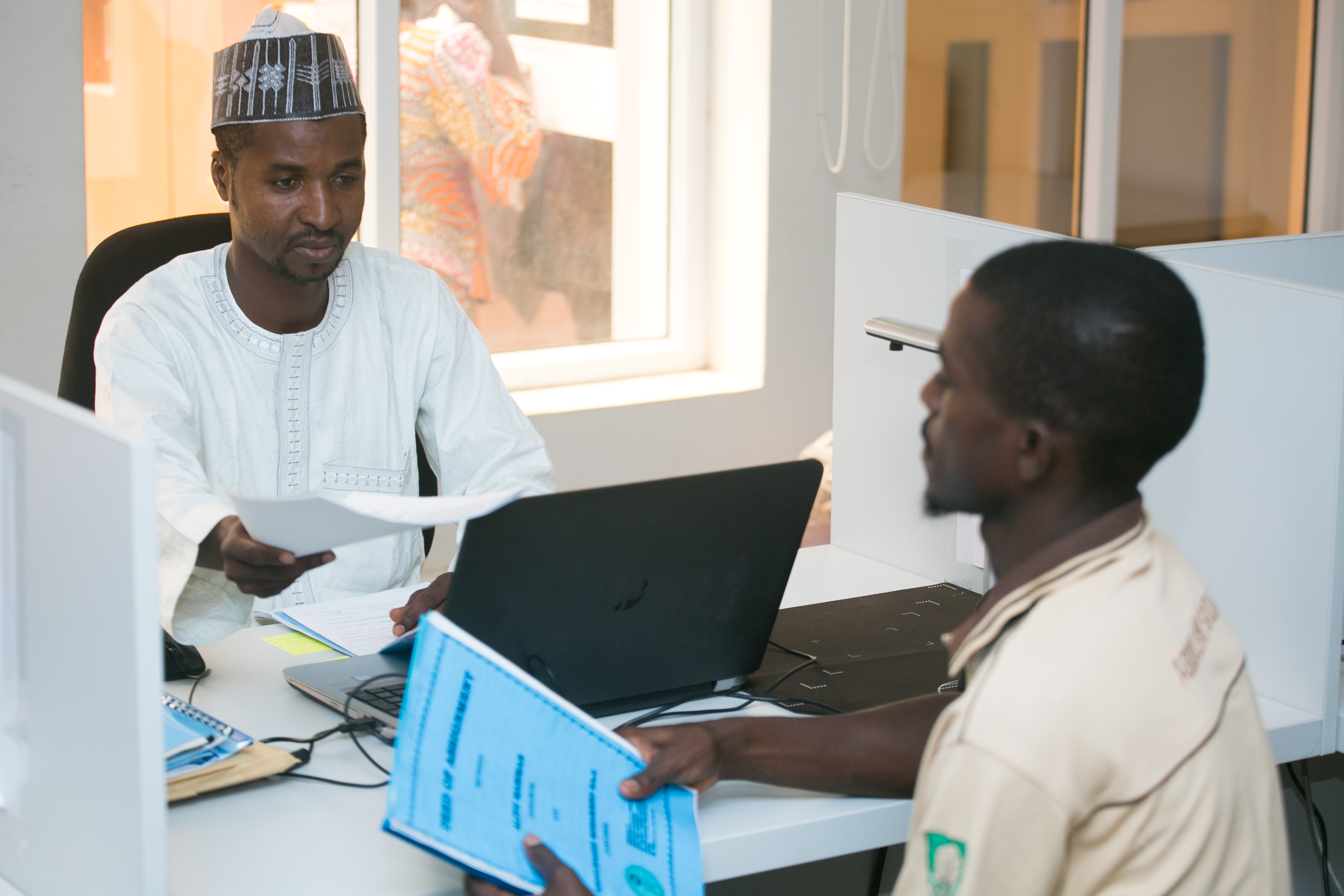
Sample Activities
- Assess digital revenue systems, fiscal institutions, and the links between revenue generation, public spending, and human capital outcomes.
- Identify opportunities to expand the tax base and improve revenue administration without disproportionately burdening poor and vulnerable people.
- Benchmark fiscal performance and document effective approaches to equitable taxation, transparency, and social spending.
- Generate evidence on how governments can convert additional fiscal space into better services.
- Strengthen government capacity to use fiscal data and evidence in policy, budgeting, and expenditure decisions.
- Convene government, civil society, technical experts, and development partners to exchange knowledge and review emerging findings.
- Disseminate lessons learned across Nigeria and Africa.
RELATED CONTENT:
Ukraine—Support to Strategic Communications
DAI’s project worked to increase the strategic communications capacity of the Ukrainian Government, with an overall objective of ensuring the public’s awareness and understanding of reform processes throughout the country, and fighting disinformation.
Read More