DAI Convenes Humanitarian Leaders at the House of Lords to Explore the Future of Humanitarian Action
June 18, 2026
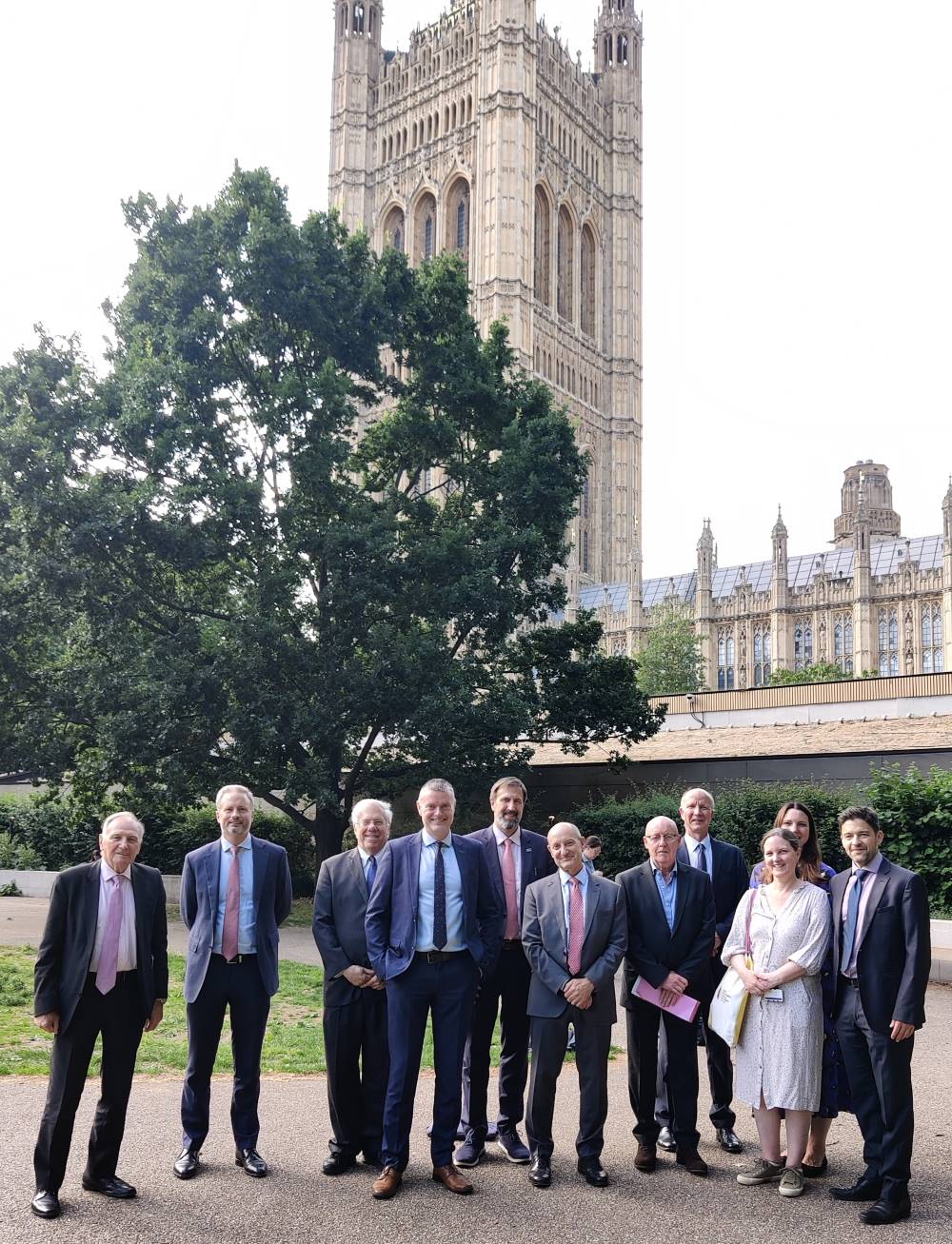
As humanitarian needs continue to rise amid tighter resources and increasingly complex operating environments, there is growing debate about how humanitarian action must evolve. On Tuesday, DAI convened leaders from across government, humanitarian organisations, civil society, and the private sector at the House of Lords to explore what these changes mean in practice.
The discussion raised important questions about local leadership, partnership, accountability, and the role of international actors in an increasingly complex world.
A Conversation Grounded in Experience
We were privileged to hear from Baroness Chapman, Sir Andrew Mitchell, Lord Bruce of Bennachie, Dr Jemilah Mahmood, Jeremy Konyndyk, Lena Mahgoub, Jamie McGoldrick, and Colum Wilson, whose experience spans humanitarian leadership, policy, diplomacy, finance, and operational delivery.
Baroness Chapman challenged participants to consider what a humanitarian system fit for today’s realities and tomorrow’s challenges should look like. Sir Andrew Mitchell highlighted the importance of transparency and demonstrating the impact of investments in humanitarian response.
Beyond Reform: Recognising Existing Capacity
The conversation moved beyond familiar discussions of reform. Local leadership is not simply a future ambition. In many crisis-affected settings, local actors, community networks, diaspora groups, and frontline responders are already sustaining systems before international actors arrive and long after they leave.
The challenge is to recognise, connect, resource, and strengthen the capacity that already exists.
Key Themes from the Discussion
Several themes stood out:
- Humanitarian action must remain people-centred. The needs and priorities of affected communities must remain at the heart of decision-making.
- Locally led responses need greater support. Flexible funding, stronger institutions, and greater support for frontline organisations are essential to sustaining effective local responses.
- Duty of care matters. Duty of care is essential to sustaining the people and systems that communities rely on.
- International actors still have a critical role to play. International partners continue to have an important role as supporters, conveners, investors, connectors, and responders of last resort.
- The UK can help catalyse change. The UK can help catalyse change through funding, diplomacy, convening power, technical expertise, and more adaptive approaches that bridge humanitarian action, development, climate resilience, and peacebuilding.
Questions for the Future
The discussion also raised practical questions about investing more directly in local actors, recognising the role of diaspora networks and local investors, expanding anticipatory action, and strengthening resilience where the risk of future humanitarian need is greatest.
These questions do not have simple answers, but they will be central to shaping the future of humanitarian action and determining how humanitarian, development, climate, and peacebuilding actors work together in the years ahead.
Looking Ahead
These are some initial reflections from a rich and timely conversation, and we are grateful to all panellists and participants who contributed.
We look forward to sharing more insights from the discussion in the coming weeks as we continue exploring how new models of partnership can support both effective crisis response and longer-term resilience.
RELATED CONTENT:
Landmark Report Calls for Social Protection to Be Recognised as Investment in Peace and Stability
The High-Level Panel on Social Protection in Fragile and Conflict-Affected Settings has launched its landmark report, Social Protection for Stability: A Catalytic Agenda, calling for social protection to be treated as a strategic investment in peace, stability, and resilience.
Read More