DAI Convenes Discussion on Climate, Nature, and Jobs During London Climate Action Week
July 06, 2026
As climate change, biodiversity loss, and economic insecurity increasingly converge, a wide range of actors across the public, private, and development sectors face a common challenge: how can investments in climate and nature also strengthen livelihoods, create economic opportunity, and build resilience?
That question was at the heart of DAI’s London Climate Action Week event, Climate, Nature, and Jobs: Turning Alignment into Action, which explored how international programming can better connect climate ambition with practical delivery.
The discussion came at a timely moment. Building on themes emerging from the recent U.K. Global Partnership Conference, including the United Kingdom’s renewed focus on international partnerships and climate-smart development, the session considered what these broader priorities mean in practice. As countries face increasing pressure to adapt to accelerating climate impacts, participants explored how future U.K. Aid programming can better connect climate, nature, and economic opportunity. Rather than focusing solely on the scale of the challenge, the discussion examined where practical delivery experience is already generating lessons that can inform the next generation of programs.
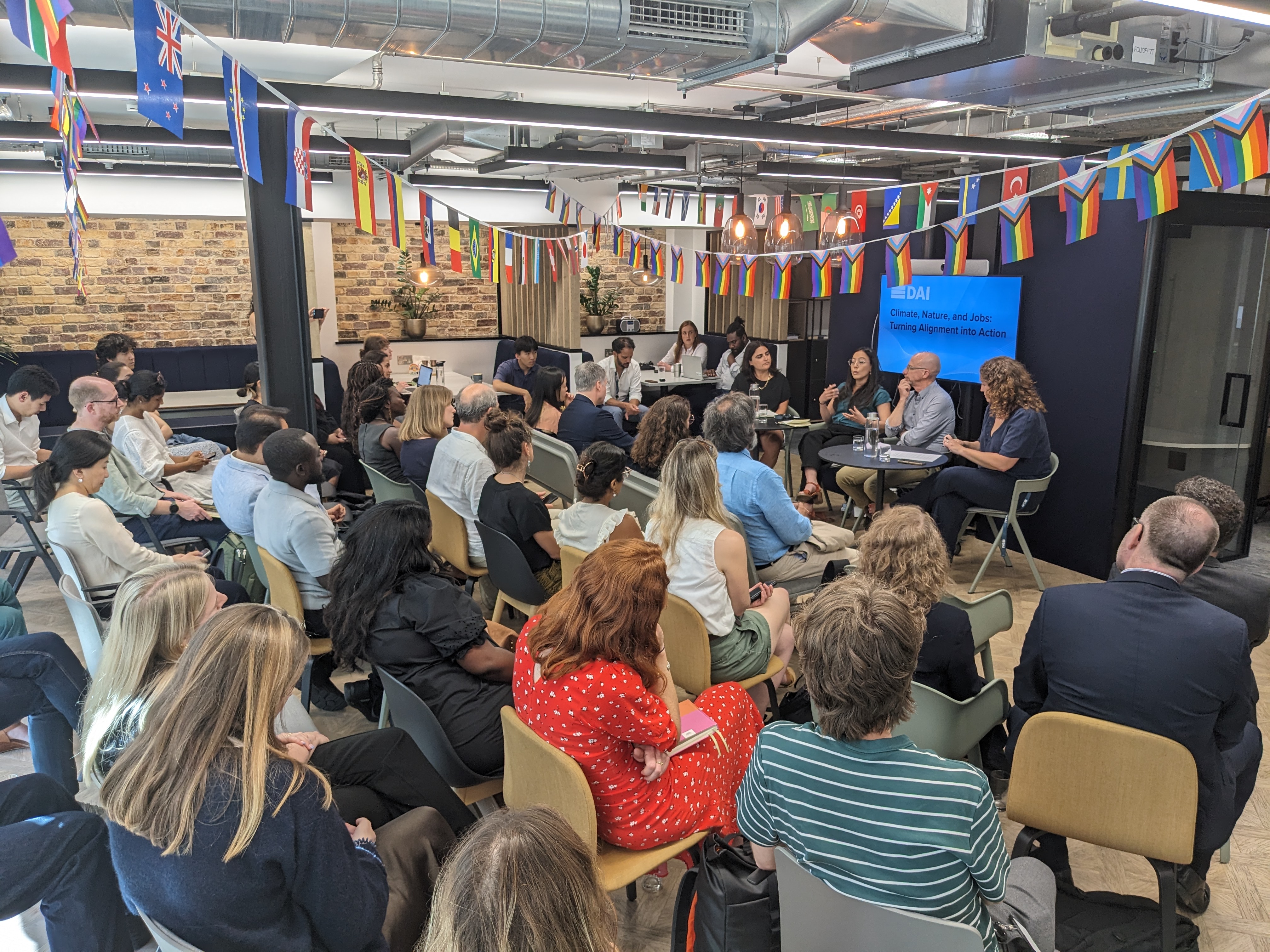
Drawing on experience from three U.K.-supported programs, the panel brought together perspectives spanning international climate negotiations, coastal resilience, and biodiversity.
Monserrat Madariaga, Senior Legal Officer at Legal Response International, shared insights from the Climate Ambition Support Alliance (CASA), which provides legal and technical support to developing countries participating in international climate negotiations. Reflecting on the role of multilateral processes, she discussed the importance of ensuring all countries can participate effectively in shaping climate policy and highlighted how strengthening legal and technical capacity can help countries translate international commitments into action while ensuring Indigenous Peoples and local communities have a meaningful voice in decision making.
Marianne Teoh, who leads the Climate and Ocean Adaptation and Sustainable Transition (COAST) Facility, discussed how integrated approaches to coastal resilience can strengthen both ecosystems and local economies. Drawing on COAST’s work across Asia and Africa, she emphasized the importance of designing programs around livelihoods from the outset, supporting local organizations, and creating the enabling policy and investment environment needed to help climate- and nature-positive enterprises grow. She also reflected on how public finance, technical assistance, and partnerships can help unlock wider investment and scale locally led solutions.
James Gordon, Biodiversity Lead for the Global Centre on Biodiversity for Climate (GCBC), reflected on how biodiversity investments can generate lasting economic opportunities when they are designed alongside local priorities. Drawing on examples from GCBC’s grants portfolio, he highlighted how innovation, adaptive delivery, and locally driven approaches can strengthen livelihoods while generating evidence to inform future programming.
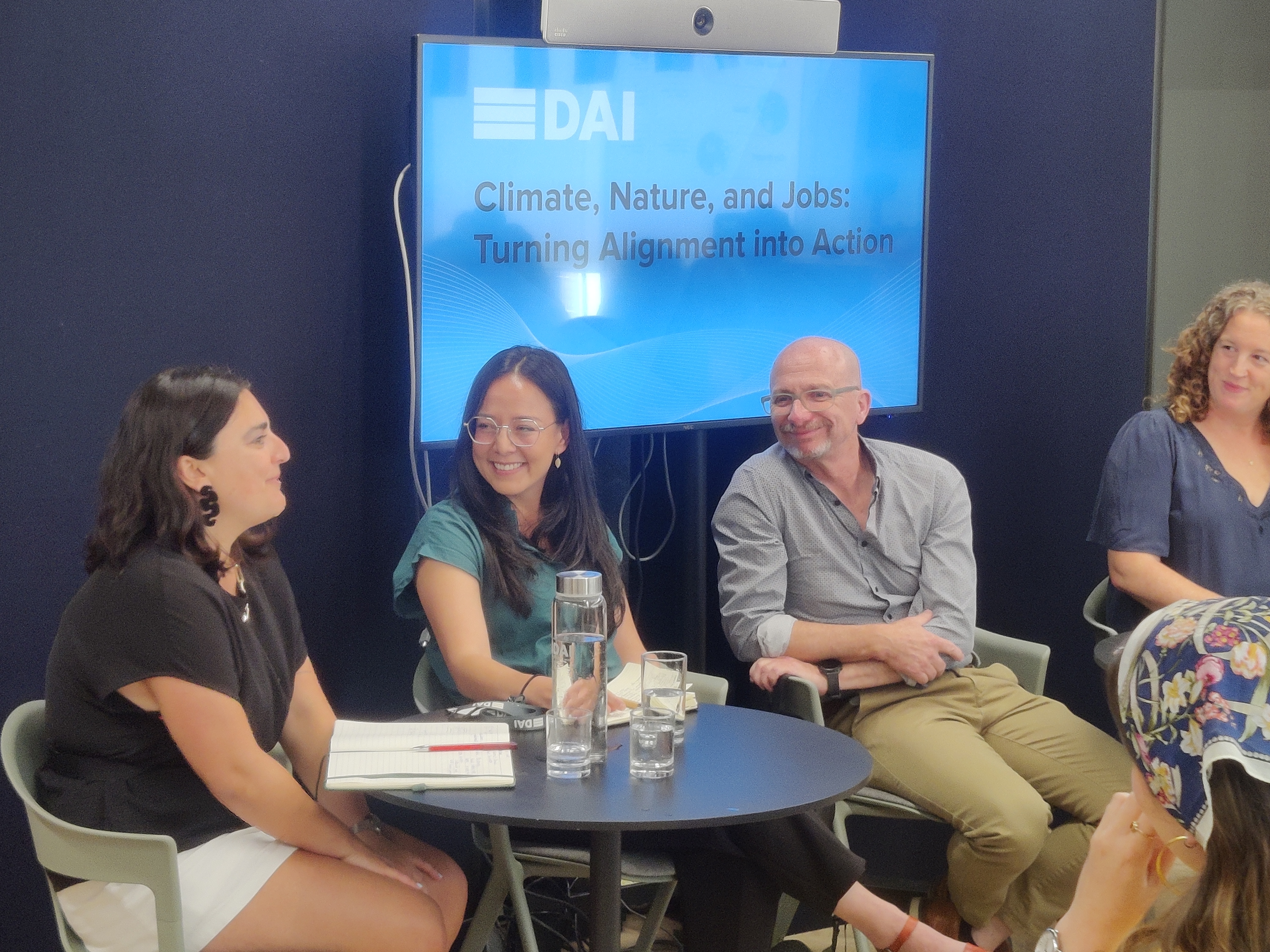
A consistent message emerged from these discussions: while the challenges are many—from financing adaptation and building international consensus for ambitious climate commitments to ensuring infrastructure and institutions can respond to changing climate risks—there are practical opportunities to accelerate progress. Strong governance, locally led approaches, partnerships across public and private actors, and flexible delivery models were identified as key factors for translating climate ambition into resilient livelihoods, stronger economies, and long-term development outcomes.
Audience discussion expanded these themes further, exploring just transition, the challenge of supporting smaller local organizations to access finance and investment, and how monitoring, evaluation, and learning systems can better balance accountability with continuous learning and adaptation.
Convened as part of London Climate Action Week, the event demonstrated DAI’s efforts to connect climate ambition with practical results, based on extensive experience delivering programs across climate finance, biodiversity, oceans, and inclusive economic growth. By bringing together practical delivery experience with policy perspectives, the discussion highlighted how lessons from implementation can help inform the next generation of international climate and development programming, helping ensure climate and nature investments deliver lasting benefits for people, economies, and the environment.
DAI works with governments, investors, businesses, and communities to advance climate resilience, biodiversity conservation, sustainable livelihoods, and inclusive economic growth. Explore our Climate and Environment pages to learn more about how we’re helping turn climate and nature ambition into practical action around the world.
RELATED CONTENT:
DAI Publishes Carbon Markets Report
DAI, in collaboration with FT Longitude, has published a report exploring what is required to establish robust, transparent, and credible voluntary carbon market systems capable of attracting international finance
Read More